
93: Doing Strategic Planning Differently with Beth Saunders
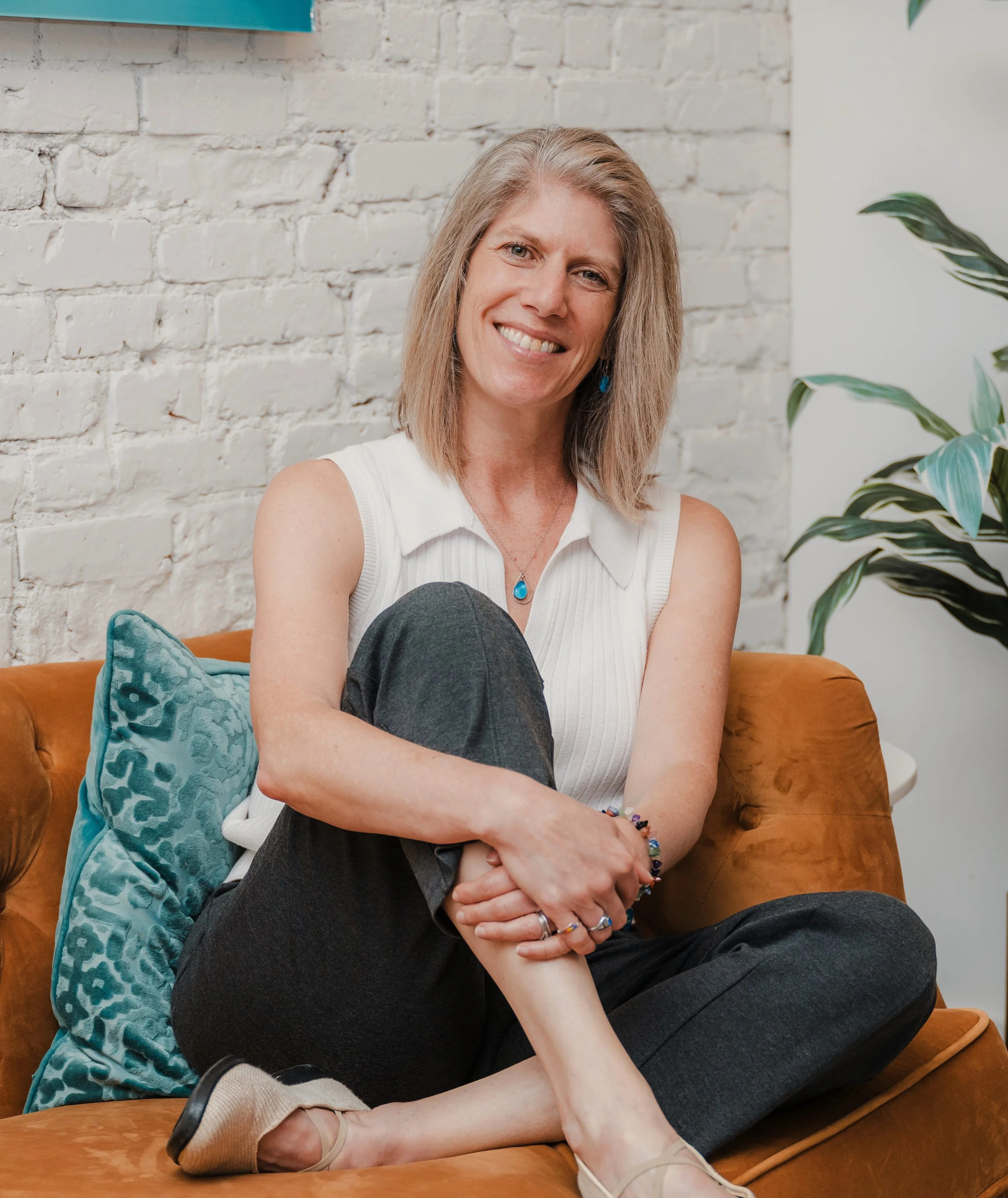
Beth is passionate about making missions happen. Throughout her consulting career, Beth has helped nonprofit leaders connect people and programs to mission and goals. Her MapMoveMeasure™ framework is a guide for elevating stewardship and increasing supporter engagement.
Beth’s customers say working with her introduces fresh perspective and new ways of thinking about their work. And they always gain clarity, strategic direction, and alignment. Beth’s consulting practice reflects her life experience. Studying abroad, earning her MBA, taking a mid-career detour to volunteer and travel, leaving her corporate job to serve in AmeriCorps VISTA and ultimately leading her own consulting practice have contributed to Beth’s commitment for connecting passion with purpose.
Download a guide, listen to conversations, and access presentation slides
Quotes:
“Planning strategically is how I reframe strategic planning. I often see strategic plans that have a high level strategy or big goals at the top and dive very quickly into the execution of it. So it's a little thin on strategy and quite robust on operations. That is actually leapfrogging right over the opportunity for a leadership team to really sit in that strategic thinking space.”
“Planning strategically from my perspective starts with a very clear, well articulated vision statement that is supported with outcomes the organization can actually achieve.”
“Every strategic plan has vision in it. And the way to make your strategic plan more strategic is to really build out that vision within your accountability and within your capacity to think about a roadmap of outcomes.”
“Be clear not only on your vision, but your roadmap of getting there. Not the work to do, but the change you're making along the way.”
To learn more about Leaving Well, visit https://www.naomihattaway.com/
To support the production of this podcast, peruse my Leaving Well Bookshop or buy me a coffee.
This podcast is produced by Sarah Hartley.
“Planning strategically from my perspective starts with a very clear, well articulated vision statement that is supported with outcomes the organization can actually achieve.”
Transcript:
Beth Saunders is passionate about making missions happen. Throughout her consulting career, Beth has helped nonprofit leaders connect people and programs to mission and goals. Her map Move Measure Framework is a guide for elevating stewardship and increasing supporter engagement. Best customers say that working with her introduces fresh perspective and new ways of thinking about their work, and they always gain clarity, strategic direction and alignment.
Best commitment for connecting passion with purpose are all tied to her life experiences, studying abroad, earning her MBA, taking a mid-career de detour to volunteer and travel, leaving her corporate job to serve an AmeriCorps Vista and ultimately leading and building her own consulting practice. Beth, I am excited to have this conversation.
We connected a while ago it feels like, um, a couple months ago around consulting businesses and how to. Navigate the work of also living a life in the middle of it. And so I'm excited to talk to you about some of the things that kind of bubbled up in our conversation, which we're thinking differently about strategic planning.
I know we share some similar thoughts on the age old tradition of strategic planning, so I'm excited to maybe have a pretty honest and transparent and candid conversation hoping that the folks as you're listening, that you also take some notes and think about how you might be able to do strategic planning differently.
So. Let's start maybe Beth by, could you share your thoughts on maybe what if the problem isn't that nonprofits need better, and I'm gonna say that in air quote, strategic plans, but that we're actually planning strategically wrong from the very beginning. Oof. Well, I'll see. That's a, that's not a soft ball.
It's not, no, no big deal to start us off with that, right? Yeah, yeah. Like, let's just dive right in. I love the question, uh, and listening to you, if I can just pause for one second. It was interesting to hear you talk about my, you know, my background and when I heard you say, you know, that I left. A corporate job.
I said, gee, I hope I left well, and I think about all of your guidance and words of wisdom. Um, it's hard to say no to someone leaving corporate when they're joining an AmeriCorps Vista program though. So I feel like I left. Well. Yeah, I'm sure you did. But yeah, planning strategically is how I like to reframe strategic planning, uh, because.
I often see strategic plans that have that high level strategy or some big goals at the top and dive very quickly into the execution of it, or like an operational plan. And so it's a little thin on strategy and quite, uh, robust on operations. And I feel like that. Is actually leapfrogging right over the opportunity for a leadership team to really sit in that strategic thinking space.
So planning strategically from my perspective starts with a very clear, well articulated vision statement that is supported with the outcomes that organization. Can actually achieve when there is a vision statement. The two words that always come to mind are lofty and aspirational. So if a vision statement is lofty and aspirational, it can leave many of us feeling it's completely like not achievable, that it's so far out there, we're never gonna get there, and it can be really difficult to garner support for that.
Yeah. So planning strategically is being clearer, right? And having more direction to how we're going to achieve that vision by stating shorter term, more tangible outcomes. Mm-hmm. Like within that organization's capacity. Yeah. I think there's also something to be said here about accountability too, and we talked when we were on our call about accountability.
Could you talk a little bit about what that can look like? You just mentioned vision often is lofty and aspirational, but how do we bring it down from that and also add in some accountability? Absolutely the vision statement. I turn it into a vision map. Mm-hmm. And that map actually has a line on it called the accountability ceiling.
And the vision map is really drawing on theory of change. So a theory of change is quite literally an organization's theory on how to create the change they intend to make. And you make that change through your mission work. Right. So mission is the work you're doing. Uh, what where we tend to ignore, quite frankly, is what is that mission accomplishing along the way to arriving at that ultimate destination of a vision?
Yeah. And so when we put an accountability ceiling in there, it's not meant to hold us down or hold us back. It's meant to say our organization can and will achieve these outcomes. We will, and we're capable of. Creating this change and this change is necessary in order to achieve the ultimate change, which is the vision.
Yeah. So a world without hunger is a vision many, many organizations are working toward, but all those different organizations, right, are making different types of impact that move us toward that world. And so that accountability is really important and accountability is made up of. Your capacity, which is both human financial, it's the scope.
It's also about the role you play in making that impact, right? Some organizations are focused on advocacy, so if your mission work is advocacy, your impact will be behavior change or policy change, which is a different type of impact from a direct service provider. So accountability is, um, a whole strategy in and of itself, right?
That's planning strategically. I also love, I couldn't help but think when you were saying that, Beth, about. You know, we, we talk about mission creep and scope creep a lot. And so the accountability ceiling to me also sounds like a way for folks to really almost use river banks of this is our work to do.
And then it also, when you think about planning strategically, then you can also go down the route of. Who are the partners that can help us do the things so that we don't creep outside of that accountability ceiling. So I'm, I love that you said that. I also really, really love your definition and diving deep into what capacity means.
Because I think often what I hear nonprofit folks say is, we don't have the capacity, meaning we either don't have the budget, or our staff is burnt out when capacity actually means so many more things, including skillset. You know, what is the skillset that our team has? Um, so anyway, I'm, we could have a whole nother podcast probably on capacity.
When, when you talk to a nonprofit leader and they say, we need to do our strategic plan for the next three years, what are they really asking for? And then I have a second question. What would happen if we gave, and I say we meaning folks that are helping. Nonprofits plan strategically what would happen if we actually help them give themselves what they actually need instead of that three year document that sits in a binder somewhere.
Well, yeah, exactly. That's that strategic plan sitting on the shelf is everyone's nemesis. Right. Okay, so what if we gave them what they really were asking for? How did you ask the first part of the question? Well, it's what are they really asking for when they say we need a strategic plan? Yeah. 'cause I see posts like that all the time.
I get referrals, you know, requests for like, we need someone to do our strategic plan. Who can you recommend? Just curious like what, what's underneath what they're really needing slash asking for that maybe they don't know. I think there's so many things that they're really asking for, and it's sort of like your imagination is limited to the vocabulary that you know.
And so I think the vocabulary that leadership teams, which are executive directors, board members, largely board members, right? Um, the vocabulary they know includes strategic planning. It includes a couple other things and those, you know, those, that glossary of terms is what gets funding. Yeah. It's also what funders tend to speak.
They speak strategic planning, right? They speak fundraising, they speak technology. These are the most commonly funded initiatives in the nonprofit space. And then when we hear strategic planning. There's always a timeframe on it, and I actually scratch my head. I'm like, how can strategy expire? Understand it, you know, I'm thinking, um, why is there a, you know, so what expires maybe are the activities, right?
These specific. Uh, streams of work that are going to be happening in order to achieve the strategy. But strategy doesn't really expire, at least not in three to five years. So I think what people are asking for is, um, the opportunity. Maybe this is just what I hope they're asking for. It's the opportunity to take a breath and think strategically because we, we, in the nonprofit sector, everything around us causes us and encourages us.
Encourages us to continue to think with a scarcity mindset, which is also what causes us to look down at our to-do list every day and deal with the thing that's at the top of the pile or the phone call that just came in. Right. And it's really, we also meant most people really just really, really wanna do good and wanna make a difference.
Mm-hmm. And you do that by doing something. So for a nonprofit leader to have the luxury, quite frankly, to pause and do some strategic thinking and look into the future that comes out of their mouths. As a str, as a strategic plan, I do think there's many, many ways to think strategically and therefore plan strategically and therefore have a strategic.
Plans, small s, small p and I feel like the organizations and the leadership teams I've worked with are, are usually quite grateful for the guidance to say, one, are you, you know, why are you asking for a strategic plan? Are you ready for a full strategic plan? Because by the way, not even a footnote, it's important.
I mean, strategic plans are important. They also have a time and a place, right? And a specific purpose. So if you're quite small and you have a staff maybe of less than five people, maybe hard to actually have the capacity that you and I just spoke about. Yeah. To do what we think of as a full strategic plan.
So it's really important to think about, are you really ready? Yeah. How would you then. Recommend the leader who's listening to this, or maybe it's a board member listening, how would you recommend that we shift the binary thinking from what we budgeted for a strap plan or when we're applying for grant funding?
And the question, the checkbox comes, do you have a strap plan? And if so, for what years? How do we navigate around and through that? Because. Okay, this is gonna go off into two different tangents, Beth, and then you can answer whatever feels the most relevant for you. When you were talking about taking a breath and people being excited to actually like, oh wait, I can actually pause from the urgency of the work.
I think that sometimes that's why nonprofit leaders are disappointed with the process of strategic planning when they've brought a consultant in, because it's just more work. There's no pause, there's no, the consultant doesn't ever, except for you, doesn't tell them just like, let's take a beat. Let's see if we're ready for this.
Let's see what we need to explore. The small s small P of what you said is also so powerful and so potent. Imagining in a world where strategic planning is not a thing to be done in, you know, parentheses and quotes capitalized, but instead as a, a, a part of the living, breathing organism that our organizations are.
So maybe that was just a side note. Maybe my question does really go back to how does the board member get over the fact that we budgeted for a strap plan? Or how does the, the nonprofit executive or the development team say. To answer the question of do we have a strap plan? Mm-hmm. If you are encouraging folks to look at this differently, I, I think they say honestly that we have one and it looks like this.
Mm. And, you know, what does it look like? It looks like the appropriate plan for that organization, uh, where the leaders have really been able to trust their, I say trust your gut, but like. Trust your intuition. Mm-hmm. I think of my role in strategic planning as one of a facilitator. I say, my superpower is to help you identify, articulate yours, and draw it out.
And all nonprofit leaders, they know they have the expertise and they have a lot of experience and they don't have the opportunity to really wield that power. What they're doing is, um, staying stuck in the doing so. Create a strategic plan, but make it your own. Trust, your intuition on what your organization is ready for and what you really need to gain clarity and direction.
That's what I think is the most important thing. If we're clear on our vision and you get clear on vision when you've mapped the rest of your outcomes within your capacity and within your accountability. Yeah, so do a vision map. Look up theory of change and do the outcomes pathway. And if you want help, there's many of us who can help.
But a vision map is a strategic plan, uh, because it guides every strategic decision. You called it riverbanks earlier, I'll say. I always call it guardrails. Yeah. We're all journeying to a specific destination, and there's many ways to get there. Yeah. I love that. Yeah. Well, and I think too, it, it comes from that place of, like you said, at the beginning of our conversation.
So many strategic plans. It's the check of the box. Yes, we did it and now we're gonna jump into the operational implementation piece of it. Um, the vision map just feels like in my body, it just feels even so much more, um, authentic and expansive to go back to even the roots of like, why are we all here?
What are we supposed to be accomplishing? Um, and mapping it out. So I wanna pivot a little bit, Beth, you have a formula that is recruit plus retain. Times variety equals engage, which I think is so amazing. How does that formula, and maybe you can dig in and, and share a little bit about it, but how does that change how we then approach the process of planning strategically, quote unquote small s, small p strategic planning with our boards, with our leadership?
I love that you, um, grabbed onto that formula. I think I've used it like once or twice when talking about engagement. Right? So we'll get to the answer and I won't ramble too much, but the idea of engagement is how we increase capacity. Mm-hmm. So every nonprofit practitioner, every leader has says, oh, we have such limited capacity.
We don't have the capacity. You have capacity and it's exponentially larger when you think about all the people who want to engage in your mission and help you achieve your vision, right? So supporters are people who donate, who volunteer, who serve on committees, who advocate, right? They're not. Donors.
That puts us in a silo of thinking that on people only, um, participate in fundraising. So if we think of supporters, then we can think about increased capacity. So first we recruit, well, we recruit people who are already interested in achieving the same goals. The same outcomes, the same impact that we're committed to achieving.
So you appeal to their interests and their motivations and you recruit them. And you don't really worry about the people not reading your email and the people not doing the thing because maybe they don't share your goals. Focus on the people who do. So you've recruited great retaining means that you're just doing stuff to keep 'em coming back.
And often that's where we end up in that hamster wheel of we have to keep them. We have to keep them, or we have to prospect and find new, and we get stuck in recruiting and retaining. Yeah. So if we do those two activities, but we offer variety, variety means how many different opportunities could we offer people to engage in our mission?
Maybe it's. All those roles I just described, right? Fundraising or volunteering or serving on committees, short term or long term, right? There's so many different ways people can offer themselves to the mission. When we do that, people then can engage at different levels. So I think the levels of engagement variety is not only in.
Different things to do. It's in how demanding or how much the person's contributing when they're doing it. Sometimes it's, please share this email with a friend that's low commitment. Please serve on this advisory committee for six months. That's mid to high serve on the board, that's high. Like there's all these different levels.
So variety is three dimensional, and when we do those things, we get engagement. And engagement differs from retention because it's about meaningful relationships. It's not about repeat activity. Yeah. Relationships are two way streets, right? Yeah. When we're in a relationship, we're both getting something from it and giving something to it, and so that's why I think of it that way.
Yeah. Yeah. I love, I love that formula so much because I think that's the thing that I hear so many nonprofit leaders talk about is like, how do we get, how do we increase our engagement? How do we find more board members? But using that simple formula, you're. Actually in the retain plus the variety piece of the formula, you're actually identifying potential board members.
You're actually identifying folks that might be able to help you lean into some of that planning strategically, the work that you need to do. And I'm thinking through even just sitting with your team and working through. Your formula, Beth, is a form of planning strategically. It does not have to be this like finite time where you bring in a consultant to do quote unquote the strategic plan.
Yeah, that simple recruitment all the way through engagement piece is a really beautiful way to have your team pitch in and support the furtherance of the mission. I agree, and it it, you know, I realize that we're talking about small s, small P, or strategic planning or planning strategically. It's also what we call a roadmap.
Mm. Right. We hear that word a lot. And a roadmap gives us options. Right. The eco efficient route, or the no tolls route, or the fastest route or the whatever, right? But there's many different routes. They're all going to the same destination. And when we have that roadmap, we've just increased confidence.
Delegating decisions to staff because we know if they can clearly point to how, what they're proposing or the program they're running or the fundraising event they wanna plan, will it help move to achieving a goal on the map? We're moving in the right direction. So engagement is internal, it's external, and that that roadmap or vision map or small SP strategic plan is.
It's not timeless. You definitely need to revisit, uh, revisit your goals on a somewhat regular basis, but it's certainly not every six months or a year, maybe even three or five years, you know, it's those impact goals are. They have a pretty long lifespan. Yeah, I love that. I'm curious, Beth, what you notice about either your clients or organizations just in the general ecosystem that you are paying attention to.
What do you notice about when they're willing, you brought up relationships earlier when they're willing to build that relational infrastructure instead of just focusing on rigid plans. Is there, are there themes that arise about either their ability to get closer to achieving mission or maybe it's employee retention or, I don't know what it might be, but is there, are there themes that kind of rise up for organizations that are doing this well, I.
Well, I'll answer that with a, a really recent story, just one story, but I think it's a good example of what happens when, when people and leaders think this way. So a recent client, we actually came and said, we, we received this grant to do a strategic plan. We found you through. Fill in the blank, right?
And we talked about it, and you know, it's a staff of one and a half and the budget wasn't what a typical strategic planning consultant would've charged. So I said, you know, you're, are you really ready? And what we ended up doing was vision mapping. And then we talked about superpowers. So working with their new board.
I also found that the board of directors that we were working with, this was their first engagement together. So, so small organization, brand new board of directors, going through the vision map process. And what each of those individuals found was they were able to articulate their own why, what, what motivated them to wanna support this organization.
And we built the vision map around all of that. That's a little simplistic, right? We started with their vision and then helped them understand what drew them into it, and every single one of them was much more comfortable. Even the person who said, I'm really here as the finance guy. This is sort of outta my league.
By the end of our work, felt more comfortable talking, a little more comfortable, right? Talking about. Impact or vision. And the executive director said to me, you know, Beth, now that we've been doing this, I'm seeing and we're talking in this way, there's some people who've been like lingering around the edges that are stepping in and they're asking, how can we help?
Yeah. And I thought, wow, it's happening already. That's amazing. That's so cool. Right? So it's not, we need you to do this thing. It's. Do you wanna join us in making this change? Yeah. Or do you wanna join us in changing our community in this way? And people get excited about that. So it was really interesting that they were already incorporating outcomes, results, which is different than the work to do.
Yeah. By changing that language, it was already inviting people to raise their hand. I love that. Step up. Yeah, I think a lot about ex, especially executive directors, CEOs, deputy directors, sometimes. Um, I think that what I see is that a lot of burnout is caused because they're trying to force the status quo to keep happening.
And so I'm loving just, I love your framework of how you bring leaders together and boards and all of those humans. To just prioritize doing something a little different and then for them to see so quickly in that example that you just shared, that it actually works. And then I hope, you know, especially for you that are listening, you have to tell your peers about this.
You have to tell. The folks that you were working with or that you're alongside. I know there's so many, like Ed, um, coffee mornings, you know, where folks gather together mostly to swap stories of how hard this is. But imagine if we all started telling each other about doing vision mapping instead of the quote unquote strategic plan.
That ripple effect could be so incredible to center that way of doing things. So I'm so glad that the work that you do exists. I was thinking about this a lot, especially when I listened to your other conversations and just the work you do, Naomi is leaving. Well, I I really feel like when you have a roadmap, it allows you to travel down that road for a period of time and leave.
Well, yeah. I think vision mapping can be when you're looking to recruit new leadership, it can be when you're looking to. Like solidify the organization or stabilize it. It, it comes at any point in time. Uh, it truly helps leave. Well, yeah. If you leave an organization and they have that clear direction. I think every country feel good.
Think about how incredible it would be to hire into a new organization and to know that they have just finished a vision mapping process with that clarity. I mean, that is, that's incredible. And I also wanna just underscore what you said too, Beth, about the individual. Why? Because I think it's so common for board.
Board members to say, you know, I dunno how to fundraise. That's not something I'm really good at. Or they'll have mission moments at the beginning of board meetings to have someone from the staff come in and, and share a recent story to hopefully like. Stir the hearts and the minds of board members. If you flip it to what you were talking about.
And instead ask your board to share their own mission moment. When were they last engaged with the mission? Um, since the last board meeting. What's their why of being here? What a beautiful way to just remind folks of their impact. And then it also makes it easier to go fundraise honestly, to be able to say, the reason I am involved with this specific organization is because insert your why, and then that will garner more interest.
Than if you just rattle off what the comms team has given you to say. So I'm glad that you brought that up. Absolutely. Yeah. And you know, if, and when people say another story is, the question I get sometimes is how do we get our board to fundraise? And I said, well, I don't know that you get your board to fundraise, but do you have a fundraising board?
Mm-hmm. Again, like reframing and flipping sometimes just makes you think about it differently. And how do you get a fundraising board is by connecting each individual member to their why? Because fundraising is about relationships. I think any fundraiser will tell you that it's not about asking for money.
It's about inviting people into a relationship to achieve shared goals. Well, if you don't know what goal you're trying to achieve or you're not comfortable articulating your why, and to me that's actually the real beauty of all of this is that it's not imparting actually new knowledge. Mm-hmm. When you did my introduction yet, it's like clients say I helped them think differently.
They already know people you, you just know. And, and if you don't, then you're probably in the wrong place. But you, you generally just know and you have a lot of expertise. It's articulating it in a and writing it down and getting on the same page. And when you do that, your confidence goes through the roof.
Yeah. That's what happened. The quick story was a board of another board, tons of questions, all these strategy questions. Right. And I was just like, well, how about if we just focus it all in? And again, vision mapping. It's not like the pan, it's not like the the magic pill for all questions. Right. But it seems to apply in a lot of scenarios.
And in this case, at the end of our process, the chair of the development committee said, I've never felt so confident writing my annual appeal letters because I was so confident in why I love this organization. It was easy for me to invite others to do the same, and I thought. That's it. You know, you've been on this board.
Yeah. You're doing a great job. But the confidence and the asking and the how do we get everyone to fundraise? It just went away. Everyone's, um, comfort with it. Yeah. Increased. Yeah. And all, and, and really what I'm doing is drawing out what they already know, what they already believe. It's their intuition.
It's their belief. Yeah. Right. Yeah. I was, um, recently at a conference listening and, you know, it's Who are your believers? They're your strongest supporters. Yeah. Yeah, and I think there's an underlying piece there too that I think we get hung up in who are high yield or high net worth donors when your believers may be able to give $5 a month, or your believers may be able to show up at an event to help.
Reduce the staff capacity for that event. I mean, there's just all sorts of beautiful ways and sitting down with the concept of a vision map, uh, is one way to get some of those things drawn out. I also think there's something to be said, and I don't know your thoughts on this, Beth, but. So often the strategic plan involves leadership, quote unquote, you know, like, uh, capital L leadership.
Mm-hmm. Folks that have been given the role of deciders. And when we, when I see outreach workers or frontline staff or part-time folks coming into the process of helping with planning strategically, there's so much more that can be opened up. And especially when you think about direct. Connection to the work that's being done.
Often our executive directors and our CEOs are the farthest from the work. So I, I'm not sure, you know, I don't know if you've got thoughts on that with how you work with clients, but I just wanna encourage you listening. If you are in the position to decide who participates in a strep plan process, capital S, capital P, or vision mapping, that you encourage, uh, yourself to think expansively about who could be a part.
I'm really glad that you brought that up because it makes me think about the missing middle and. The framework you mentioned that I designed, map, move, measure really is both levels. We've talked a lot about vision mapping and that's the map. And to me that is strategic level, strategic direction. It's governance, it's what are we really about, what do we stand for?
The measuring refers to that variety of engagement. And there's another structure, a framework called. Engagement pyramid and that framework I've adapted to be, again, that multi-dimensional idea of one person can play the role of a donor or a volunteer or an advocate. And when we give different opportunities to engage, if you're watching, my hands are going up and down and around.
I talk with my hands in the air, but the staff are the experts on that. Right, the, all of the staff, um, and I hope including the executive director right, know who wants to participate. And what happens is we engage people at low levels. Like, oh, we need someone to staff a table, you know, at the local farmer's market.
Or we want more people to open our emails or do a quick donation online. That's kind of lower level of engagement. It's like one hit wonders. And then we go, oh, we have to recruit for our board, and we jump way to the top and we need people to help lead. You need the middle and in the middle level of engagement, you have tons of volunteer opportunities, advisory and advocacy.
And that's planning strategically when you create your pyramid, your matrix of engagement opportunities. You have a well to dip into so that, and I say it this way, you always have the right offer for the right person at the right time. Yeah. So you have to track and understand relationships so that you know what that person's main interests are.
What's their affinity to your mission? What goals matter to them the most? How can they participate based on where they are in their life at that moment? All of that is very strategic thinking, and again, it's a way of drawing out the experience and expertise of the folks in the organization at all levels, putting, charting it out and then having it to refer to.
That structure is not meant to restrain, right. Or contain It actually allows much greater creativity and flexibility. Yeah. Because all that decision making is within a framework everyone agreed on. So again, confidence goes up. Yeah. You can fail fast because you're flexible. You try it, you, you know your supporters.
You offer opportunities. You work towards a goal. And when they say no, they told you something important. Right? And then you offer something else. But if you only ever have one or two things to offer, you feel like you're losing people all the time. Yeah. I love that. And I'm so glad that you have. The experience and expertise to be able to see that over time and be able to distill it into something that is so plain and so easy to understand.
And so as you're listening, I would love for you to rewind and listen to that section again because it's so potent. I also think about when you were talking about the missing middle board nominations and board growth is the thing that everyone, you know, lus about. And you mentioned the measurement and the data and the tracking of who is in your pipeline already.
Mm-hmm. I just am thinking about when you were talking the beauty. Of the possibility of having someone who has been volunteering with you for five years, asking them to serve on your board and knowing that you probably would not have to ask them to come up with their Y versus, and I'm gonna get a little snarky here, versus the local big corporation who has to have their members serve on X number of boards, and so they kind of slot them in and you have to pull out their why from them because they're like, I don't know.
I was just told to be here. There's just so much possibility when you bring folks into your. Mission who have already been, they've been raising their hand and saying, I believe in what you do. Um, giving them that variety of engagement is so powerful. I love it. Um, as we start to wrap up, um, is there anything that we haven't before my last question, is there anything that we haven't had time to talk about or that I haven't asked you yet?
We've covered an awful lot in a short amount of time, so I'm gonna buckle up for your last question. Okay. All right, here we go. So the last question is wanting you to speak directly to the leader who is listening and their thinking. This sounds really, really great, but my board expects a traditional strategic plan.
What's one advice, one piece of advice that they can take with them today and they can share with their peers for how to flip that script? You've talked a little bit about it, but what's the one actionable way that they could really flip that narrative? I really go back and I believe that if a traditional strategic plan is, is a must have, it's important, uh, to always ask first, are we ready?
And let's make sure that when we, when we are gonna go through that process, that it has as much impact as possible. And every strategic plan has vision in it. By the way, if yours doesn't. Um, but every strategic plan has vision in it. And the way to make your strategic plan more strategic is to really build out that vision within your accountability and within your capacity to, to think about a roadmap of outcomes.
And so the answer wouldn't be, let's not do that strategic plan, or we don't have enough staff, or we don't have the budget for it. It's when we get there, let's make sure we get the most of that process. So be not only clear on your vision, but your roadmap of getting there. Not the work to do, but the change you're making along the way.
Make sure that you know, that you know your outcomes along the way. Mm-hmm. To get there. Mm-hmm. Be involved. Don't expect to consultant to come in and do your strategic planning. They really should be facilitators and draw out what you know to be true. It's interesting that you say that, and I'm so glad that you said it because my experience, so back in the day, I was a real estate agent and every single time I helped a client buy or sell their house, mostly when it was buying, I would get some kind of a comment of, well, we found the house.
Of course you did, because you're the one that intimately knows what it is that you need for you and your family, or you intimately know what it is that you're ascribing to and you're visioning for your, your future. Of course, you're the one that found it. Um, and I think of that all the time when I think of consultants that are coming in and the expectation that the consultant is going to do A to Z and everything in between, like you said, Beth, and I'm, I'm so excited to know about you and the work that you do as.
They're there to draw out and help re help you remember what you already know, help you take that pause like you mentioned earlier, to not have to have the urgency around the doing, but to make some time for the strategy. And so I'm thankful that you exist. I'm thankful that you're doing this work in the world.
Thank you for being here with me, Beth. We'll have all of the information about how to connect with Beth and her website links, all of that in the show note. Thanks for listening. I encourage you to think differently about planning strategically after you've listened to this episode. Thanks, Beth. Thank you.
If you are an organizational leader, board member, or a curious staff member, take the leaving while assessment to discover your organization's transition readiness archetype. It's quick and easy, and you can find it@naomihattaway.com. Slash assessment, it's Naomi, N-A-O-M-I, hattaway, H-A-T-T-A-W-A y.com/assessment.
To learn more about leaving well and how you can implement and embed the framework and culture in your own life and workplace. You can also see that information on my website. It's time for each of us to look ourselves in the mirror and finally admit we are playing a powerful role in the system. We can either exist outside of our power or choose to decide to shift culture and to create transformation.
Until next time, I'm your host, Naomi Hadaway, and you've been listening to Leaving Well, a Navigation Guide for Workplace Transitions.